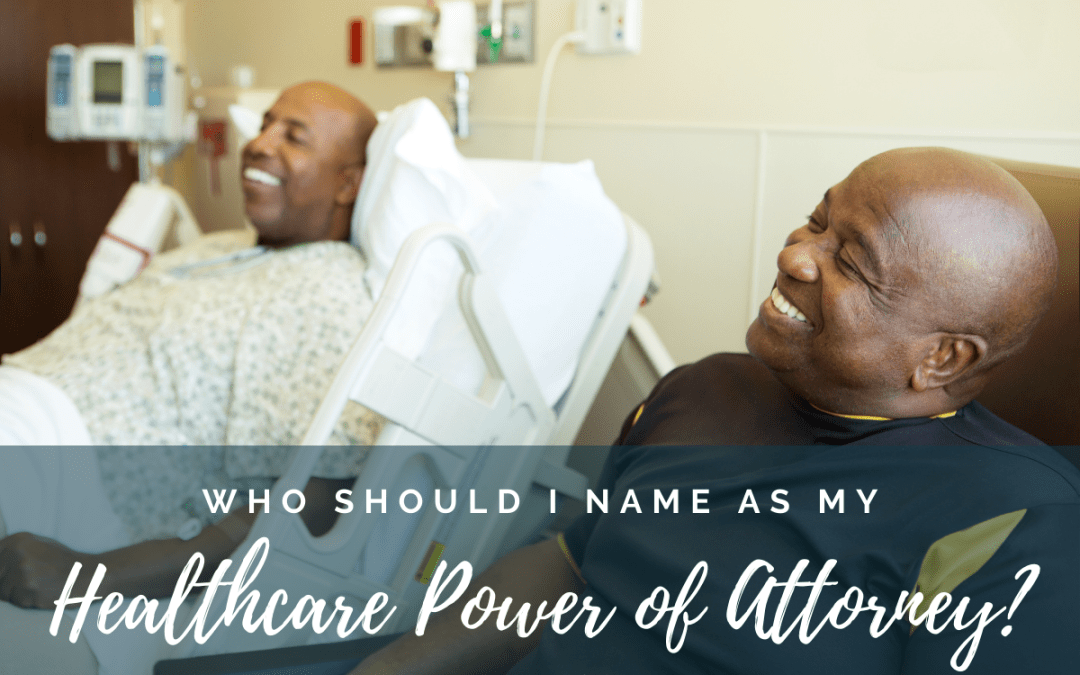
Your medical power of attorney, also known as your healthcare power of attorney (HPOA), should name somebody who is accessible in an emergency. This is someone who will naturally be right by your side or someone who will be available by cell phone. This person is known as your “agent” for healthcare decisions.
Who is the best person for the job?
The ideal candidate for a healthcare agent is someone who can meet these basic qualifications:
You trust their judgment
It’s good to have somebody who is already in a position of making decisions with you and for you. Someone who you would trust to help you in carrying out the decisions that you have made. They also need to be able to take the information you have provided them and apply it to a different situation.
They can handle stress in an emergency
All medical emergencies are stressful. Pick an agent who has a history of making logical decisions at difficult times.
The agent will honor your values regarding medical decisions or end-of-life care
The agent you choose should be someone who knows you very well. You have discussed your values, goals, and preferences. Make sure your agent is someone who will act as your spokesperson and advocate.
You feel comfortable speaking to them about your death, dying, or care during incapacitation
In order to have a good healthcare agent, make sure that you are both comfortable discussing your values around death and dying. This is a serious topic that deserves a well-thought-out conversation. Be prepared to discuss what quality of life you want to have and what types of treatments you would want to have to maintain it. The more you speak together about your feelings towards death, dying, and treatments if incapacitated, the better your agent will be.
They will be available at any time
A good healthcare agent is someone who is going to be available when you need them. There’s no way for you to know when you will need your healthcare power of attorney. You need a reliable person who will answer the phone or make a return call as soon as they get the message that they are needed to make healthcare decisions for you.
Someone who lives nearby
Oftentimes it’s a good idea to choose an agent who lives close by. While not completely necessary, it is better to have an agent who will naturally come to the hospital to be with you during an emergency.
Someone who is younger than you
While not necessary, it is often very useful to have an agent who will likely outlive you.
Choose someone who can be your proxy for medical decisions.
In conclusion
Again, your healthcare agent should be someone who is easily accessible. Someone that you feel comfortable discussing your wishes with, even though they may be uncomfortable topics, and someone who respects your choices and would help you carry them out. Most people pick their spouse or adult child to be their healthcare agent. However, if you have a medical professional in your family, that person may be a good choice depending on their relationship with you. Ultimately it is up to you to choose someone you are comfortable with making these types of medical decisions.
Why do you need a healthcare power of attorney?
While not all healthcare power of attorneys ever go into effect, it is important to have one in the case of an emergency. You never know when you will be unable to make decisions or communicate your decisions for yourself. If you need help with creating a healthcare power of attorney, medical directive, or other documents that formulate a well-thought-out estate plan, consider scheduling an initial call with us.
As a parent, you want your child to lead a happy and fulfilling life and have healthy marriages of their own. However, it is hard to ignore the possibility of divorce. No matter how much you may love your child’s spouse, your interest is always in protecting your child. So when estate planning, how can you ensure that your child’s inheritance will not be split with their spouse in a divorce?
Division of property in a divorce will depend upon whether the property is considered “separate property” or “marital property”.
What is the difference between separate and marital property? Separate property is the property that belonged to an individual before marriage. This can include monetary assets, cars, real estate, and sometimes even pets. Marital property, on the other hand, is the property that was acquired or shared during the marriage. So what happens if your child puts their inheritance into a joint bank account? To answer this, we need to discuss how Tennessee law views inheritance.
How does Tennessee view “inherited” property in a divorce?
In Tennessee, inherited money or property is generally considered to be separate property. This means that whether your child inherits before or during their marriage, the court will treat the inheritance as exclusively belonging to your child. They are not obligated to share it with their spouse. However, have you ever heard a long-married couple say “what’s mine is yours, what’s yours is mine?” Many couples treat property this way, which can work well unless the couple decides to separate. This brings me to a very important point:
If your child puts an inheritance into a joint banking account shared with their spouse, it would become marital property subject to division at divorce.
How can you ensure that your child’s inheritance will be divorce-proof, no matter how your child handles the inheritance?
One way to ensure the safety of your child’s inheritance is to set up a Family Trust. In general, a family trust is an estate planning tool that protects your family and your assets. A family trust is a three-party relationship between you (the Grantor), your child (the Beneficiary), and the person in charge of maintaining and distributing the assets in the trust (the Trustee). Through a Family Trust, you will be able to determine how and when your assets will be distributed by the Trustee to your Beneficiaries after your death.
In the divorce context, a Family Trust is a great option because the property is held by the Trustee. This means that on paper, the property from the Trustee will not technically belong to your child. So in the event of a divorce, a court will not consider the assets from the trust for division. Family Trusts are generally flexible and easy to set up, and they are even cost-effective. Of course, if a Family Trust is not right for you, your estate planning attorney will be able to provide alternate options to achieve the same goal!
Do you need a family trust to protect your children’s inheritance?
Of course, nobody wants to believe that their child’s marriage will end in divorce. However, estate planning is all about considering life’s “what if” questions. In the end, setting up a trust for your family will allow you and your child the confidence that their inheritance is safe.
To learn more about trusts and other estate planning tools that Elder Law Attorneys in Tennessee use, follow us on Facebook or Instagram!
There are many ways that seniors are preyed upon by scammers. Some ways are more common than others. In each instance, a scammer seeks to gain control of the elderly person’s finances or property for their own benefit. However, in order to stop fraud, it’s important to know the specifics. The following post will discuss how to help your aging parents avoid scams and fraud.
Educate Seniors About Suspicious Phone Calls
Swindlers often cold-call seniors to get personal information. Here are a few common phone scams you can look out for:
Sweepstakes scams
Inform your elder to be suspicious of phone calls stating that they have “won” a sweepstakes. These scams will try to get the senior to provide bank account information for direct deposit. They may also try to convince the senior to send a check to pay for the taxes on their “winnings”.
Grandchild scams
In this scam, an elder will receive a call from someone stating that they are a grandchild who is in trouble and in need of help. When the senior answers the phone they will hear something like this: “Grandma, it’s me… please don’t tell my parents.” The caller will then claim they are out of town and need to be wired money to make bail or to pay for travel expenses. Have a discussion with your loved ones about what to do if they receive a phone call like this. Many families create a “code word” for everyone to use. If the scammer doesn’t know the code word, then they are not who they say they are. A code word is a quick and effective way to vet emergency phone calls.
Voter registration scams
The voter registration scam is when someone calls about registering the elder to vote, asking for their address, birthday, Social Security Number, or a password or PIN code.
Healthcare scams
An elder may get a call offering discounts on health insurance or a call from someone claiming they work for the government and need a Medicare number or Social Security Number to issue a new card.
How to Help Seniors Avoid Being Scammed on the Telephone
We cannot stress how important it is to encourage seniors to never give out their personal information to strangersover the phone. Even if the people on the phone are claiming to be friends or loved ones!This is one of the best ways you can help your seniors avoid getting scammed. If your loved one is getting an exorbitant amount of phone calls from people they don’t know, consider asking them if you can change the settings on their phone to only allow notifications from numbers already found in their contacts.
If you suspect your aging parent has already been a victim of a fraud crime, report it to the National Elder Fraud Hotline 833–FRAUD–11. This hotline is a free resource created by the U.S. Department of Justice (DOJ), Office for Victims of Crime for people to report fraud against anyone age 60 or older.
Help Aging Parents Avoid Scams by Talking Openly About Finances
Ask your aging parents if they would consider allowing you to join them on their next visit to financial advisors, accountants, attorneys, and other important service providers. If you are welcome to join them, you will have a unique opportunity to prove to the providers your relationship and good intentions towards the senior. If the service provider believes that you have the senior’s best interest at heart, they may contact you when and if they believe something suspicious is going on with your loved one’s accounts.
We must warn you that becoming too involved in a loved one’s financial life may create the appearance of undue influence. It is important to help keep loved ones from being exploited, but you also don’t want to find yourself the subject of a lawsuit claiming that you are the one committing financial exploitation. Please be careful in how you approach discussing finances with the seniors in your life.
Stay Up to Date on Changes Made to Their Estate Plan
Check to see if a non-relative has been included as a representative or beneficiary, or if any relatives have been cut out of the estate plan since the last time you reviewed it. There may be perfectly reasonable explanations for these changes. However, they could also indicate that someone is trying to manipulate your loved one.
Ask Your Senior About Caretakers or Sudden “Best Friends“
Has a non-relative, long-time friend, or neighbor started spending a lot of time with your loved one? Do they suddenly have a new “best friend” or someone who takes care of them at home?
These developments could be a sign that someone is trying to work their way into an elder’s life in order to exploit them, financially or otherwise. It might seem innocent enough (and even generous!) for a new friend to “hang out” with an elder and take care of their medical and financial needs. But because of the potential for abuse, we recommend hiring caregivers through a reputable agency. Obtain reviews and make sure they have the proper licensure and training.
Making new friends and meeting people is fine, and even encouraged to minimize the isolation that many older adults face. However, it’s important to communicate with your loved ones to make sure they are not giving un-vetted people undue control over their life.
Investigate Sudden Missing Items or Extravagant New Purchases
It is important to talk with your elderly loved ones about finances so that, if they consent, you can regularly review their statements and stay up to date on other financial developments. One easy way to do this is to have the senior grant you view-only access to their bank accounts. You may also consider a paid subscription monitoring app such as EverSafe or LifeLock. These companies provide constant monitoring for any unusual activity on the accounts. This makes preventing suspicious transactions much easier.
Make sure to ask questions about weird financial transactions. Have there been any large cash transfers? Vehicles suddenly missing or new ones showing up unexpectedly? Heirloom household items that have disappeared? Fancy or expensive new gadgets showing up that are out of character for your loved one to buy? This can indicate that someone has convinced the elder to give them assets or that they have duped the elder into buying something they don’t need.
Recruit Friends, Family, Social Groups, and Neighbors to Keep a Watchful Eye on Your Senior
Keep an open dialogue with neighbors, friends, and advisors who are connected with your aging loved ones. The more people you have looking out, the less likely it is that someone can take advantage of them without your knowledge. Elder abuse is less likely when a senior has a variety of people checking in on them.
A Strong Estate Plan Can Help Aging Parents Avoid Scams
Finally, encourage your aging parents to meet privately with an experienced Elder Law Attorney to determine what they can do to protect themselves from bad actors. Having a legal document in place naming a trusted advisor, or agent, to help handle finances can protect them. An experienced Elder Law Attorney also knows what questions to ask and the warning signs to look for in suspected elder exploitation.
Other Ways You Can Help Aging Parents Avoid Scams
The main point you should take away is that it’s important to have an open dialogue with your aging parents about the variety of scam tactics out there. Send your loved ones this article about how to protect themselves. It has a lot of great tips that can be implemented right away.
Do you want help creating a Financial Power of Attorney or other legal support? Give us a call. You can schedule your free 15-minute Initial Call online. It’s easy! We are here to help.
Elder fraud and financial exploitation have become an epidemic. As a Nashville elder law attorney, I am seeing more than ever before, con artists and family members alike taking advantage of their elderly relatives, friends, or neighbors. The numbers have only gotten worse with the Covid-19 pandemic and a larger aging population.
The best defense against elder fraud is having caring friends or family with the senior’s best interests at heart. But those friends and family can only prevent elder fraud if they know how to spot it.
What is Elder Fraud?
Broadly defined, elder fraud is when someone improperly (or illegally) uses or steals a vulnerable senior’s assets. Every state has a different definition of “elder fraud” or “financial exploitation” of an elderly person. In Tennessee, financial exploitation of elders or other vulnerable adults can be prosecuted under criminal and civil laws. Edler fraud is a form of Elder Abuse.
The 3 Common Financial Scams that Victimize Seniors
A recent survey identified the three most common scenarios of financial exploitation:
Theft or diversion of funds or property by family members.
Diversion of funds or property by caregivers.
Financial scams perpetrated by strangers.
In the two most common scenarios of financial exploitation, the fraud is committed by someone who knows the elderly person. Most people think of fraud as emails from Nigerian princes or telephone scams. In reality, however, financial exploitation is commonly perpetrated by family and friends.
Another common misconception is that adults are only susceptible to elder fraud if they have a condition that can affect memory and reasoning skills. According to the Alzheimer’s Association, 15-20% of elders 65 and older have some type of mild cognitive impairment. But it is important to recognize that any senior can fall victim to elder fraud, and many do.
How Can I Help a Senior Avoid Being Scammed?
There are a number of things you can do to help prevent your loved one from being taken advantage of. Start by educating them on the tell-tale signs of elder fraud and how to protect themselves.
Most importantly, if you are concerned that a loved one is being targeted by a financial predator or a loved one with bad intentions, you should seek help as soon as possible. That may mean calling the police, your loved one’s attorney, and in some cases, even the FBI.
As an Elder Law Attorney in Nashville, I am here to guide you through any of the issues that you may be facing. To schedule an appointment, simply call schedule a free 15-minute Initial Call and we’ll see if we can provide you with some guidance on what to do to help you avoid common scams that victimize seniors.
At some point, everybody thinks about creating a Last Will and Testament. However, many never do. Having a conversation about what will happen to your belongings after your death- and then seeing it on paper- is a daunting task.
So, what happens if you never do it? We’ll give you our best lawyer answer- it depends! When a person dies without a will, they die “intestate.” Every state has different intestacy laws that dictate who will inherit a person’s property when they die intestate. So who inherits your things depends largely on what state you live in, and your family composition. Below we detail what will happen to your estate if you die intestate in Tennessee.
What happens when you die intestate in Tennessee?
Are you married with or without children?
Let’s start with the simplest scenario: if you are married with no children, your spouse will inherit your entire probate estate. However, this will change if you do have children. If you are survived by your spouse and one child, each will inherit one-half of your estate. Additionally, if you are survived by your spouse and more than one child, your spouse will inherit one-third of your estate, with the remainder split evenly among your surviving children.
Let’s say you die without a will in Tennessee while unmarried or widowed with children…
If you do not have a spouse or are widowed, your estate passes to your children. All of your biological and/or legally adopted children inherit equally. In some cases, children are able to prove their parentage by DNA testing after a parent has passed in order to claim part of the estate. All children will inherit equally, so it is important to inform your family of all children who may have a right to inherit from you.
What happens in the tragic case of a child dying before a parent? If your child gave you grandchildren before they passed, then their share of inheritance will pass to those grandchildren. Otherwise, their share will be split among your other children.
Or you die while unmarried without children…
Let’s say you are not married and you have no children, but your parents survived you. Your parents will inherit your entire estate. If neither of your parents survived you, your estate would then pass to any siblings you may have.
I don’t have any close heirs. Who gets my assets if I die intestate?
But wait: I am not married, I have no children, I survived my parents, and I have no siblings. What now? In this case, a probate attorney may need to do what is called an “heir search” which is basically creating a family tree to find your closest relative(s). Your closest blood relatives will receive your estate. In the event that they cannot be found or do not respond to the attorney, your estate may be deposited with the Probate Clerk’s office and ultimately turned over to unclaimed property.
Who will inherit your assets?
Create a will if you want control over who inherits your estate
Of course, the easiest way to avoid confusion and know for certain where each piece of your estate will end up is to create a valid estate plan including a Last Will and Testament. Thinking about what will happen after death is a daunting task, but in the end, it will save your surviving family more money and stress.
Do you want to get a head start on your Will or need to update your Will? Take our Virtual Estate Plan Challenge! We created this 7-email series to help our Clients and guests organize their thoughts about their wishes for their estate. You can use this information later on when you create your documents. Give it a try!
This week we are going to talk about why you need a medical power of attorney, even if your spouse is available to make decisions for you.
In a medical emergency, there is an assumption that your spouse would be the health care agent, make health care decisions, and deal with the hospital and doctors on your behalf. However, what happens when a spouse is separated, no longer wants to be in contact, or doesn’t agree with your health care values?
If this happened to you, would you still want them to make decisions for you? Do you want your adult children to make medical decisions for you? What if your spouse and children disagree on what type of treatment(s) you should receive? When faced with an emergency, please consider having your medical Power of Attorney already in place.
What happens if you don’t have a Medical Power of Attorney?
There are many situations that can arise when you become incapacitated or have a healthcare emergency. Even if it seems unlikely that your spouse would be disinterested in your health, it’s important to remember that your spouse may have trouble thinking clearly in an emergency or may also be seeking medical care. A medical Power of Attorney with an agent that is capable of making medical decisions, even in an emergency, can lower the risk and confusion regarding your medical decisions.
What is a Medical Power of Attorney and why you need one.
A medical Power of Attorney, also known as a Durable Power of Attorney for Healthcare, is a document that allows you to appoint someone as an “agent” to make decisions about your health care. This agent will make decisions on your behalf if you become too ill or incapacitated. A medical Power of Attorney ensures that your wishes will be followed. We have an experienced estate planning and probate attorney here in Nashville who can help you customize these decisions and record how choices will be made.
Choose someone you trust to make medical decisions for you.
How to choose the best Agent for your situation
When you are choosing your medical agent for your Medical Power of Attorney, it is important that you choose someone you can trust to adhere to your preferences regarding your medical care. Discuss your wishes with your agent before they need to make any care decisions. Make sure that you have confidence that your Agent will make the right decisions about things you two have not discussed.
Don’t wait to create your medical POA.
Conclusion: Why everyone needs a Medical Power of Attorney
It is important to think about what you would want in a medical emergency. Do you want your spouse to always make decisions for you?
Designate ONE person authorized to make decisions for you if you are unable to make or communicate your wishes. Even if you want your spouse to make those decisions, it’s always a good idea to have a “backup” person. This backup person can help out with decision-making in case your spouse is unavailable when someone needs to step in.
Whatever you decide, you should have a Medical Power of Attorney. Write your power of attorney in conjunction with your advanced directive (also known as a living will). All of these documents are an important part of a well-thought-out estate plan.
Do you have a plan for emergencies? Do you want help putting your values on paper? Take our Virtual Estate Planning Challenge! This 7-part Challenge helps you brainstorm the important stuff before creating your estate plan. We had a ton of fun making it and think you’ll really benefit from it too.